In our Cover Story, read how Spark™ Approver helped Dr. Javen Durham’s practice achieve the simplicity of one method, one system, and one platform, while improving the patient experience and positive results.
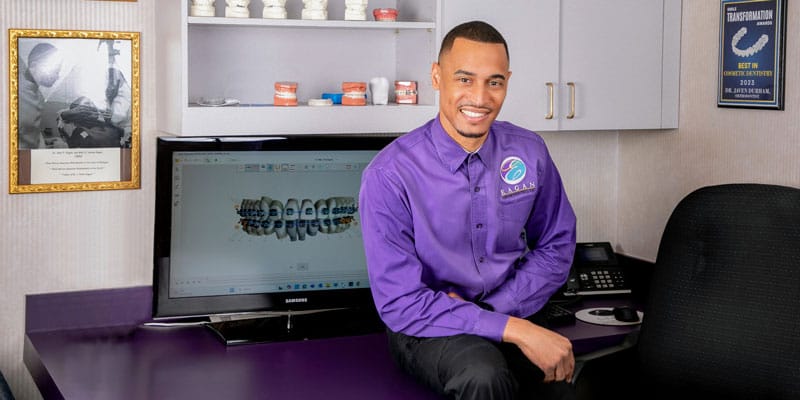
In Dr. Javen Durham’s practice, legacy meets innovation
Imagine a world where your digital orthodontic workflow is no longer a tangled web of logins, uploads, platforms, and protocols — but a single, seamless system that just works. That’s the world I live in now, and it all started the day I integrated Spark™ Approver Software, Ormco™ Digital Bonding (ODB), and Spark™ Clear Aligners into one cohesive platform.
From pouring dental models in the basement of my family’s orthodontic office at just 10 years old to making history as the world’s first African American third-generation orthodontist, I havefollowed a path paved with passion, perseverance, and legacy. A proud graduate of Meharry Medical College, I continued my journey at the prestigious Howard University Orthodontic Program, where I honed my skills and embraced the art of transforming smiles. Today, I stand not only as a skilled clinician but as a living testament to the power of heritage and hard work, carrying forward a family tradition while inspiring the next generation of excellence in healthcare.
As an orthodontist at Eagan Orthodontics, a 70-year-old family practice started by my grandfather, the first African American orthodontist in Michigan, I have witnessed the evolution of this industry firsthand. Eagan Orthodontics is a place where legacy meets innovation, and in all my years, I’ve never seen anything quite as transformative as Spark Approver Software.
Since making the switch from a major competitor, I have started over 500 indirect bonding cases using ODB. The difference isn’t just noticeable — it’s revolutionary.
In the past, managing patient records, uploading scans and photos, ordering aligners, and submitting indirect bonding cases required us to navigate multiple platforms. Each site presented its own unique rules, quirks, and upload requirements, making the process mentally exhausting for both me and my team.
Now, with Spark Approver, everything lives in one place.
Our new system offers a single, intuitive interface for managing patient cases. With this system, I can track patient cases, submit ODB workflows, upload scans and clinical photos, and review aligner designs seamlessly. This streamlined approach eliminates the need to guess where information is located, chase down support tickets, or panic over forgotten logins during a busy afternoon.
The simplicity of one method, one system, and one platform reduces the mental burden on my team and me — and, more importantly, eliminates unnecessary friction that used to hinder what truly matters: delivering excellent patient care.
Let’s talk about precision. Combining Spark’s ODB and clear aligners within a single digital ecosystem has improved the accuracy of our treatments significantly. When the entire digital workflow is connected, every detail, from bracket placement to aligner staging, becomes intentional, efficient, and consistent.
With ODB, the indirect bonding process becomes even more powerful. Brackets are positioned with precision, guided by a digital setup that reflects the ideal outcome, all reviewed and approved by me directly in the Spark platform. In my experience, there’s a high level of customization and control, and because I’ve started over 500 ODB cases, I’ve seen how predictable and efficient the results have become.
It’s like having a digital assistant that never sleeps, is always optimizing, always ready, and consistently reliable.
Here’s what genuinely surprised me: with Spark Approver streamlining much of my workflow, I gained something I didn’t even know I was missing — time.
That extra time has translated into:
- More face-to-face engagement with patients. I’m not buried in my screen or stuck uploading files. I’m connecting, listening, explaining, and building trust.
- More collaboration with referring doctors. With time to spare, I’m able to review interdisciplinary cases more thoughtfully and offer real-time communication and insights, which makes me a better partner and a better provider.
- More freedom to study complex cases. Rather than rushing through a setup or skimming through a CBCT, I now have the space to explore, plan, and approach each case with a deeper level of care. This builds not just better outcomes, but better confidence for patients, especially those who’ve been told they’re “too complicated.”
And yes, even more freedom at home.
If you’re still juggling multiple platforms, struggling with inconsistent upload requirements, or trying to piece together a workflow from mismatched tools, I urge you to look at what Spark Approver can offer.
It’s more than just software. It’s a digital command center that enables you to provide better care with less stress. The future of orthodontics is here — and it’s integrated, intuitive, and highly effective.
Before Spark Approver, I often worked from home, reviewing submissions, fixing errors, chasing case approvals, and switching between platforms late into the night or on weekends. Family dinners were interrupted, vacations had “just one quick case to upload,” and even game nights with family and friends often included a laptop on the coffee table.
Not anymore.
With everything streamlined through Spark Approver and efficiently completed in-office, I get to leave my work at the office. That means evenings spent with my family, not fixing uploads. Weekends filled with relaxation, not last-minute aligner checks. And yes, it means I can finally enjoy Detroit Lions and Pistons games without feeling behind.
That shift in work-life balance? It’s not just good for my mental health, but it’s good for my whole team, my family, and ultimately, my patients.
Running a third-generation family practice that’s 70 years old comes with a sense of responsibility. Our patients trust us not only because of our name and history, but because we continue to invest in the future. When we made the switch from our previous platform to Spark, it was more than a software upgrade, it was a commitment to better, faster, smarter care.
Case example
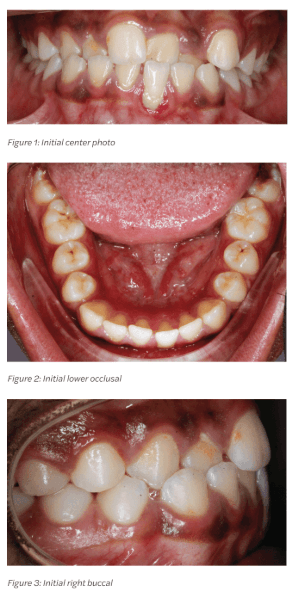
This case involves a 13-year-old female patient with a complex malocclusion that includes multiple dental and skeletal issues. During the initial consultation, clinical evaluation showed severe
maxillary crowding along with generalized spacing in the mandibular arch. The patient’s occlusal relationships were asymmetric, with a Class I molar relationship on the right side and a Class II molar relationship on the left. Notably, an anterior crossbite was observed, further complicated by a narrow, V-shaped maxillary arch — a common presentation that often exacerbates anterior-posterior discrepancies and limits functional occlusion. The patient also demonstrated poor oral hygiene, which is a key indicator of an indirect bonding system that does not reduce excess flash. ODB is superior in flash reduction, by being able to remove excess adhesive from three sides of the bracket instead of competitors who only remove adhesive from one side of the bracket. The presence of adhesive around brackets contributes to surface roughness which leads to plaque accumulation.1 Flash reduction will be very important for every patient’s orthodontic success (Figures 1-3).
The initial bonding appointment was completed efficiently within 35 minutes, including a comprehensive session on oral hygiene instructions and home care practices. Efficient time management at this visit allowed for strong patient education and engagement, factors that contributed positively to overall treatment adherence and outcomes.
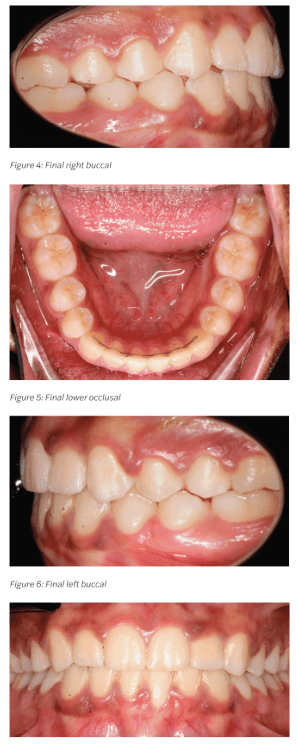
The treatment spanned a total of 12 appointments, which included all routine, emergency, and one reposition appointment. Notably, the reposition was necessitated by a clinician error in the delivery of a bonding jig, resulting in bracket misplacement. This underscores the technique sensitivity involved in indirect bonding systems and highlights the importance of clinician training and procedural verification. Emphasis on consistent technique evaluation and training among providers has proven instrumental in reducing such avoidable errors
(Figures 4-6).
The results speak for themselves. Treatment planning is tighter. Turnaround is faster. Patient experience is smoother. And the time we used to spend managing systems is now spent building relationships and delivering results.
Disclaimer: Ormco, a medical device manufacturer, does not dispense medical advice. Clinicians should use their own professional judgment in treating their patients.
Read more about how Spark™ Approver software and Spark Aligners helped Dr. Claudia Pinter to offer a bigger range of esthetic treatments in her orthodontic office here: https://orthopracticeus.com/precision-with-spark-aligners/.
References
- Blochberger BL, Symmank J, Nitzsche Á, Nietzsche S, Steiniger F, Guellmar A, Reise M, Sigusch B, Jacobs C, Hennig CL. Influence of the orthodontic bonding procedure on biofilm formation. Orthod Craniofac Res. 2024 Feb;27(1):95-101. doi: 10.1111/ocr.12692. Epub 2023 Jul 20.
Stay Relevant With Orthodontic Practice US
Join our email list for CE courses and webinars, articles and mores